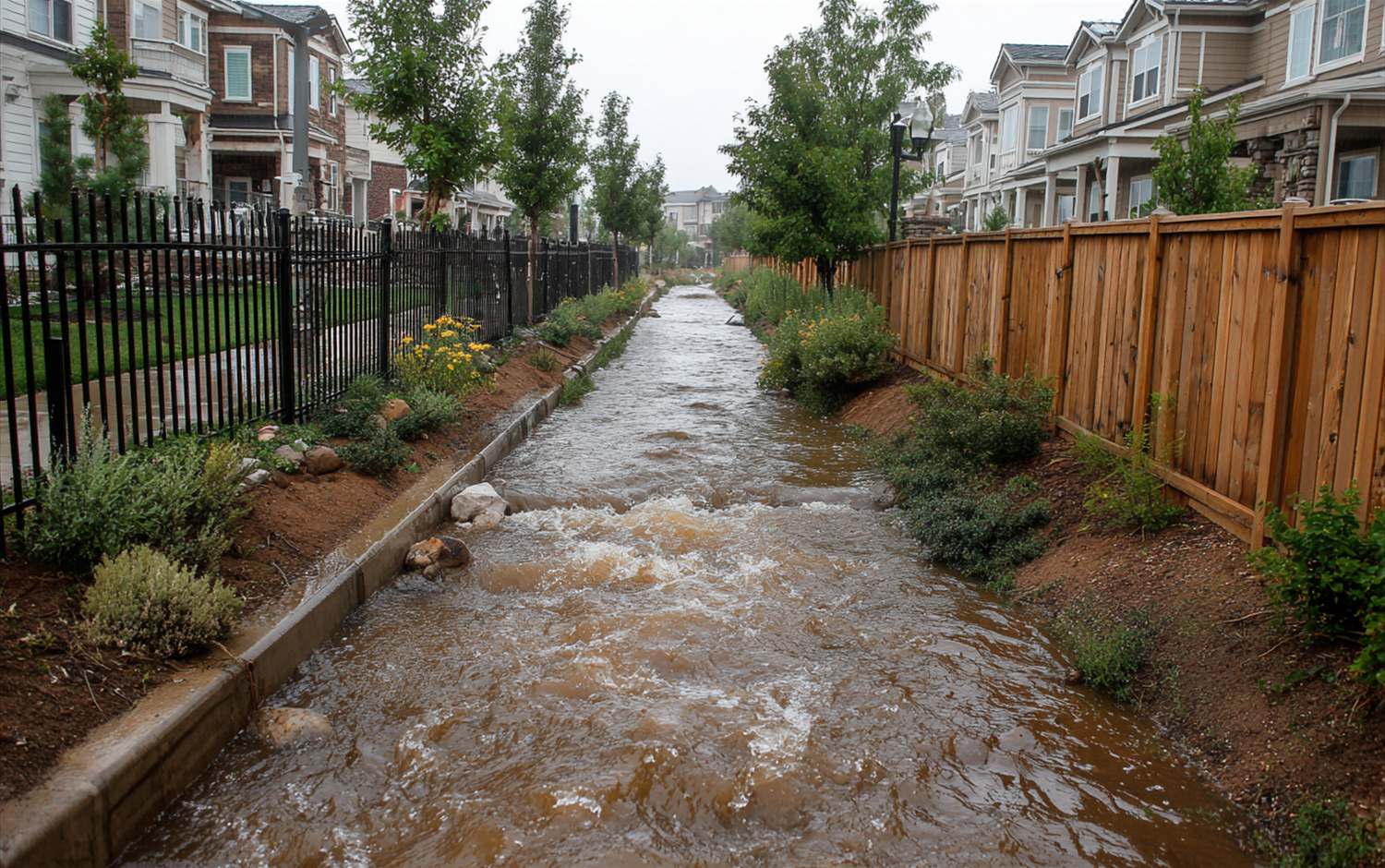
Source: an irrigation canal that runs higher than its banks, gets blocked by storm debris, or has a bank that gives way. Canal water reaches houses across yards and through window wells, basement doors and garages, and it's treated as outside water.
Why Canals Run Next to Houses
West Jordan's canals are older than its subdivisions. Around 1850 the Gardner brothers dug a millrace from the Jordan River, and canals spread across the valley to water farms long before anyone planned a cul-de-sac. When the farms became neighborhoods, many canals stayed. Today they run behind backyard fences, beside parks and under roads, carrying irrigation water roughly from spring into fall.
Most of the time a canal is a quiet strip of water and a maintenance road. Trouble comes in three ways:
| What happens | Usual trigger | What it looks like |
|---|---|---|
| Overflow | A summer storm washes debris into the canal, blocking a culvert or gate | Water spills over the bank and runs across yards toward the low side |
| High water | More water in the canal than its banks can carry, often in a storm during irrigation season | Water seeps or spills along a long stretch |
| Breach | A bank weakens and fails | A fast, heavy flow through a gap, carrying mud and debris |
Local news has covered canal water spilling into West Jordan yards and streets near 4000 West and 9300 South after a storm, and a canal break that flooded lanes of Bangerter Highway. Across the river in Murray, a 2013 breach on the North Jordan Canal sent water into homes, and adjusters looked at damage to at least eight houses.
Where It Gets In
- Window wells on the canal side fill and spill into basement bedrooms.
- Walkout and basement doors facing the canal let water straight in.
- Garages stepping down into the house carry water to the interior door.
- Foundation walls soak through when the yard stays flooded for hours.
The First Hour
- Stay away from moving canal water. It's deeper and faster than it looks, and banks can keep failing. Keep children and pets well back.
- Keep people out of the basement if water is near outlets or the electrical panel.
- Photograph and video the canal, the water's path across yards and into your house, and every wet room.
- Report it to the city or the county so the canal's operator is reached.
- Write down the date, the time, who you talked to and any reference number.
Cleaning Up Canal Water
Canal water carries soil, plant debris and whatever it crossed on the way. Restoration companies treat it as dirty:
- Carpet and pad that soaked it up are removed.
- Drywall is cut above the water line, and wet insulation comes out.
- Mud is shoveled and cleaned out before drying starts; dried mud holds moisture underneath.
- Hard surfaces are cleaned before equipment goes in.
- A furnace or water heater that sat in the water is checked by a technician before it runs.
More on outside water: canal, storm and main-break flooding.
Who Pays?
There isn't one answer. Canal companies operate the canals, and their responsibility depends on what caused the overflow or break. Homeowner policies often exclude surface flooding. A separate flood policy may apply. Document everything, tell your insurer early, and keep the canal company's and the city's reference numbers.
Living Next to a Canal
- Learn who operates the canal behind your house and how to reach them in an emergency.
- Keep the bank side of your yard clear of anything that could wash into the canal and block it.
- Watch the level during storms in the irrigation season.
- Know which window wells and doors face the canal, and keep their drains clear.
Around West Jordan
The oldest canal country sits near City Center and the Jordan River. Newer neighborhoods like Copper Hills still have canals and channels nearby. Across the river, Murray has its own canal history, and Riverton backyards back onto old irrigation lines too.
Salt Lake County Flood Control Utah Division of Water Rights
Canal Season, Month by Month
Canals don't carry the same water all year. Before the irrigation season they're often low or dry, and that's when debris collects in them: branches, trash, tumbleweeds. When the gates open in spring, that debris moves downstream and can jam at a culvert or a bridge. Through summer the canal runs steadily, and the risk shifts to afternoon thunderstorms that add runoff on top of a full channel. In fall, flows drop again. If your house backs onto a canal, the weeks right after water is turned in, and the days of summer storms, are when to keep an eye on it. Photos of the canal at normal levels make it easier to show later how high it got.
Questions
Can I clean canal mud out myself?
Shoveling mud from a driveway is fine with boots and gloves. Inside the house, wet materials, drywall and insulation that touched canal water should be handled by the restoration company.
Will the canal overflow again?
If the cause was a blockage, clearing it fixes that event. If the bank is weak or the canal runs high regularly, report it and keep records of each time it happens.
Is canal water the same as river flooding for insurance?
Policies define flood in their own terms. Ask your agent how canal water is treated under yours.
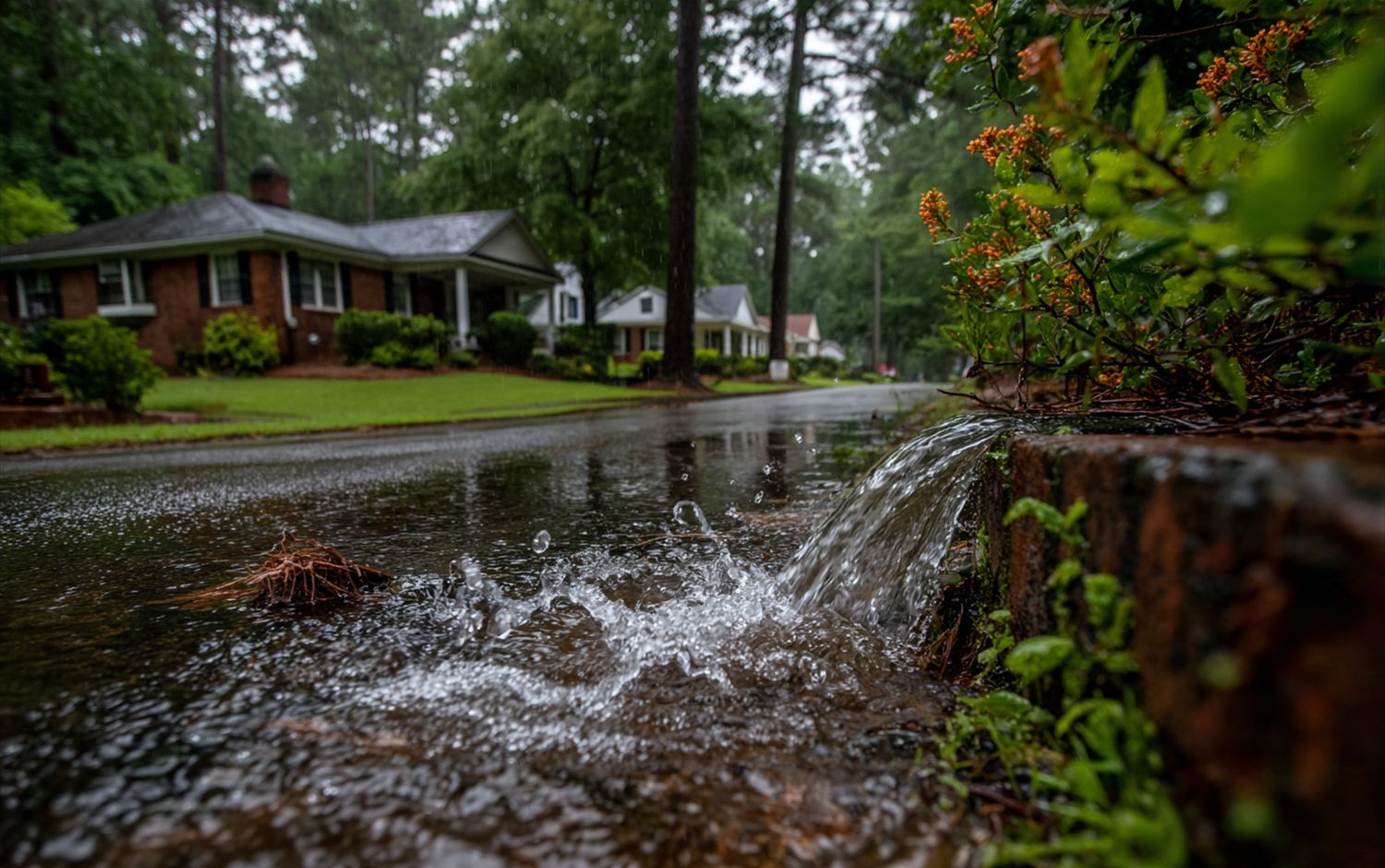
When a City Water Main Breaks on Your Street
Clean water, fast, down every driveway on the block.
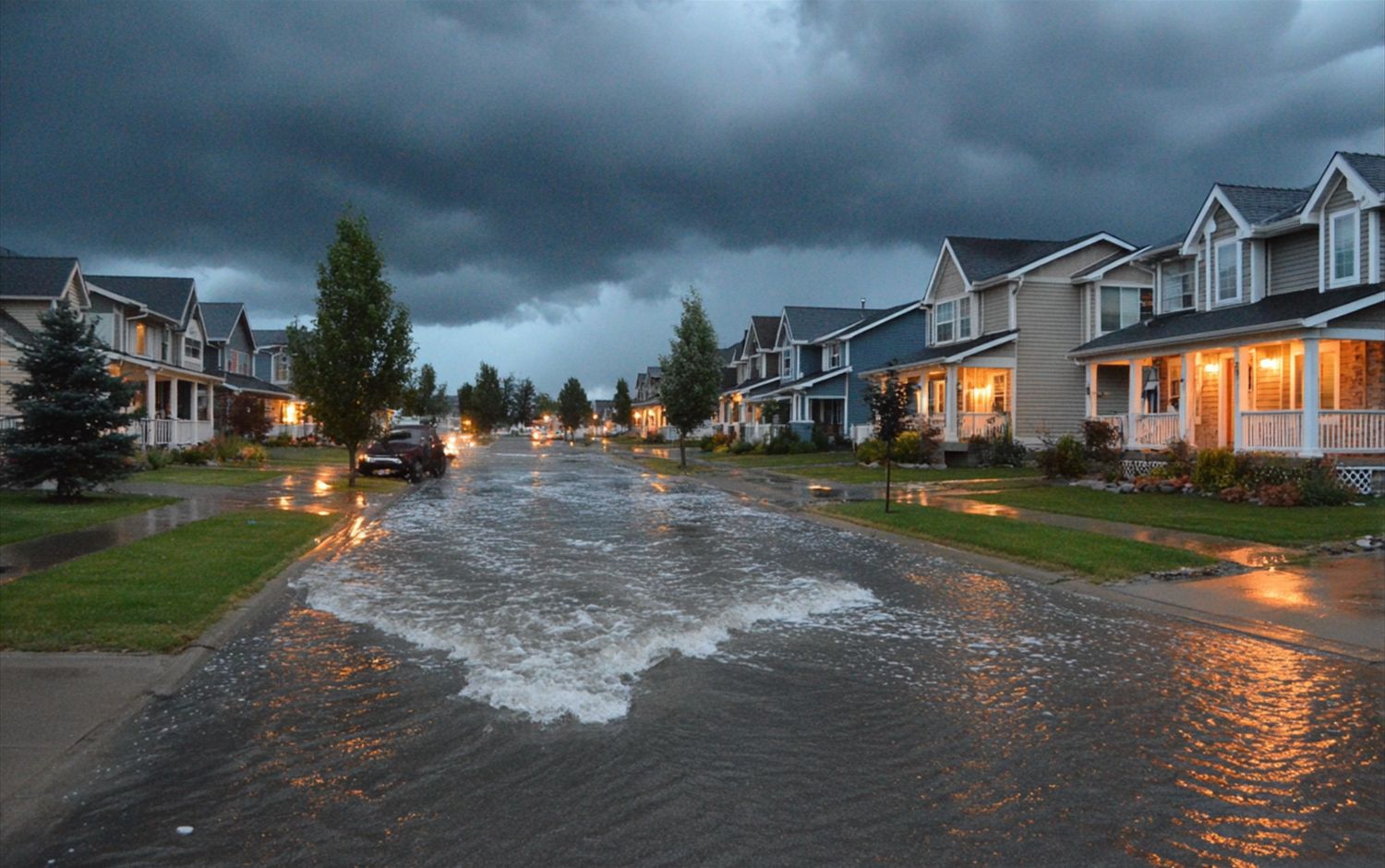
Summer Cloudbursts and Street Flooding on the West Side
An inch of rain in an hour, and where it goes.