Water Mitigation, in Plain Terms
Water mitigation is the work that limits the damage: get the water out, pull the materials that won't recover, and run drying equipment until the readings on wet materials come back to normal. Think of it as the front half of a restoration project. Nothing is rebuilt yet; the goal is a dry, stable house that's ready to be put back together. Anyone looking for a water mitigation company or water remediation in West Jordan is usually looking for exactly this. Dial (385) 318-3819 to reach an independent restoration company that handles it here.
Source: drying stalls if water keeps arriving. A broken line has to be shut off; a canal, a city main or a yard that slopes toward the house has to be stopped or redirected before the equipment can win.
What Happens in the First Two Days
- Finding the edges. A technician uses moisture meters, and often an infrared camera, to trace the water: across the main-floor subfloor, down inside the walls, under the basement carpet and along the slab. Tape or chalk marks show where wet stops and dry begins.
- Pulling out the water. Extractors draw standing water and the water trapped in pad and carpet backing.
- Taking out what won't recover. Soaked pad, swollen baseboard, the lower section of saturated drywall and any wet insulation behind it. If the water came from outside, anything porous it touched comes out.
- Setting the equipment. Air movers sweep across wet surfaces; dehumidifiers capture the moisture they release. Small vent holes at the base of a wall let air into the cavity.
- Taking the first numbers. Each wet material is measured and compared with the same material somewhere dry. Those comparisons are the baseline for every visit after.
Source: a clean leak handled on day one leaves the most room to dry framing and drywall where they are. Outside water, or water left for days, pushes the plan toward removal.
Dry Air Helps, But Not With Everything
Salt Lake Valley air is dry for much of the year, and that is a real advantage. Dehumidifiers pull water from dry air efficiently, and surfaces give it up quickly. Some things still dry slowly here:
- Concrete slabs. A slab that sat under water for hours holds moisture well below its surface and gives it up over days.
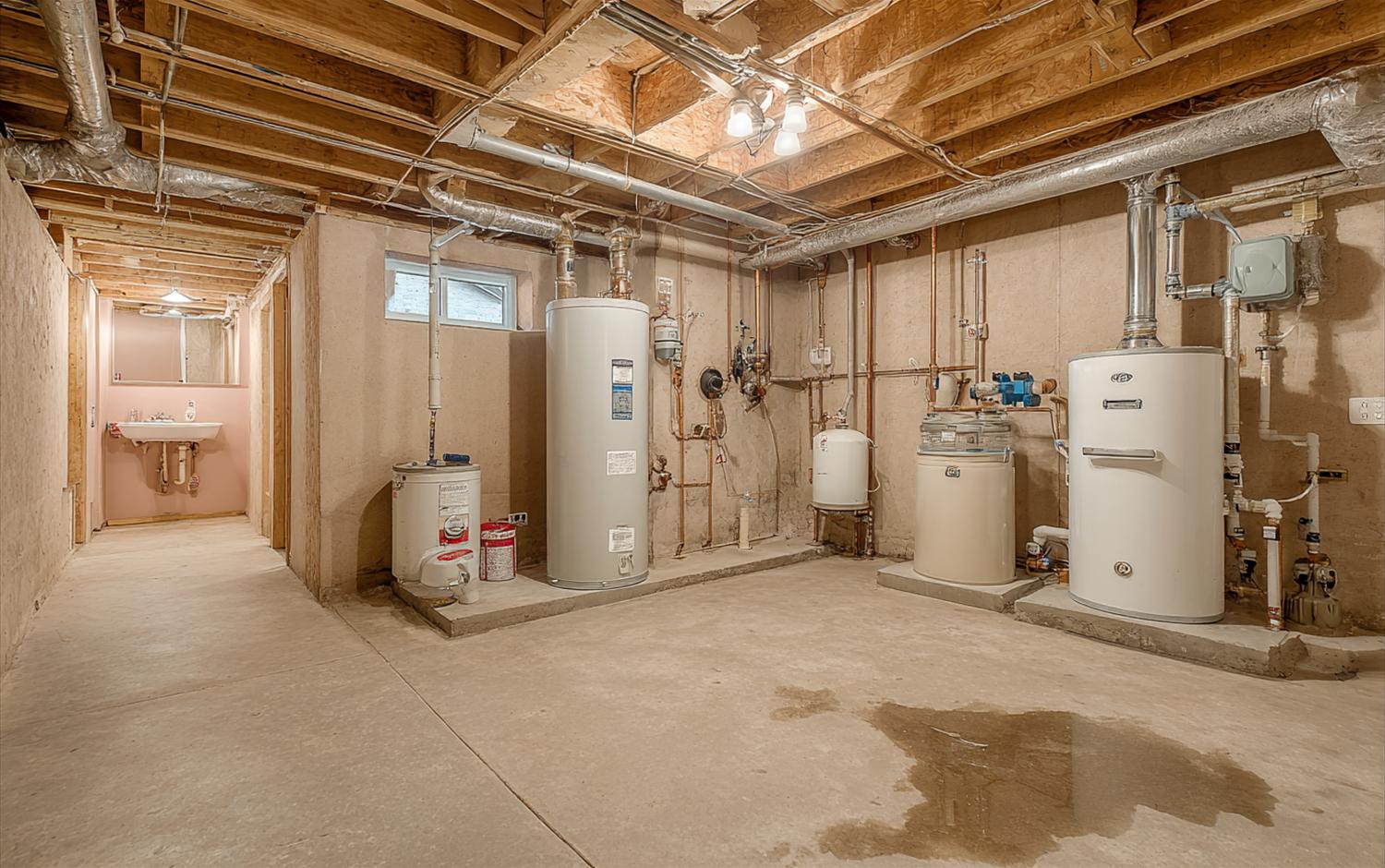
- Walls against the foundation. Basement framing and insulation sit next to cool concrete, where moisture lingers behind the drywall.
- Hardwood and engineered floors upstairs. Wood dried too quickly or unevenly can cup or crack, so it's dried slowly on purpose.
- Closed basement bedrooms. Small windows and shut doors mean each room needs its own equipment.
In summer, a company may vent the space to use the dry outdoor air. In winter it usually keeps the house closed and heated so conditions stay predictable.
How "Dry" Gets Proven
Finished means the numbers match, not that the carpet feels dry. At every visit the company should log three kinds of reading:
| Reading | Taken where | What it tells you |
|---|---|---|
| Moisture content | The same marked spots on each wet material: drywall, studs, subfloor, slab | Whether each material is still losing water |
| Dry reference | The same materials in a room the water never reached | The target the wet readings have to reach |
| Air conditions | Temperature and humidity inside the drying area, and outside | Whether the equipment setup is working |
A clean-water loss commonly dries in three to five days. Soaked slabs, walls against the foundation and hardwood above a wet ceiling often stretch that out. Ask for the log in writing; insurers often request it.
Outside the Scope of Mitigation
- Repairing the cause. The pipe, the water heater, the window well drain or the yard grading is separate repair work.
- Putting the house back. Drywall, texture, paint, carpet, trim and doors come after drying is confirmed. See water damage restoration.
- Servicing appliances. A furnace or water heater that stood in water needs a qualified technician's look before it runs.
- Contents. What happens to furniture and belongings is between you and your insurer.
Sharing the House With Drying Gear
Expect noise. Air movers and dehumidifiers run nonstop for days, they warm the rooms they're in, and they draw enough power that a basement breaker may trip. Leave each unit where the crew set it; moving one can leave a wet wall undried. Keep doors open or closed the way you're asked. If a breaker trips, call the company instead of shuffling cords. Most households keep living on the main floor while the basement dries, and pets usually do better kept away from the equipment.
When Two Floors Got Wet
Water from a main-floor bathroom, kitchen or laundry often soaks the subfloor and comes through the basement ceiling. Both levels are dried together: equipment upstairs, and sometimes a section of basement ceiling opened so air can move between the joists. Hardwood above a wet ceiling may get drying mats on top, or be dried from below through the opening, so the boards don't split.
Clean, Gray and Outside Water
Restoration companies sort water by how clean it is, because that decides what can stay:
- Clean water from a supply line, a water heater or a split pipe, caught quickly. The most can be dried in place.
- Water that has picked something up, such as a washer's drain water, a dishwasher's discharge or clean water that sat for a couple of days. More cleaning, and some porous materials come out.
- Outside water from a canal, a flooded street or storm runoff. Porous materials it touched are removed, and hard surfaces are cleaned before drying.
Telling the company which one you have at the start saves a day.
When Should Mitigation Start?
As soon as the source is shut off and the space is safe. Drywall starts wicking within hours, and pad and particleboard swell within a day. The earlier the extraction, the more of the house can be dried rather than replaced.
Is Water Mitigation the Same as Water Remediation?
The terms are used interchangeably. Either one usually means removing the water and drying the structure. Ask what the scope includes and how the company proves the drying is finished.
Mitigation Around West Jordan
In West Jordan
- City CenterIn West Jordan
- Jordan OaksIn West Jordan
- Shadow MountainIn West Jordan
- Oquirrh ShadowsIn West Jordan
- Jordan HillsIn West Jordan
- Cobble CreekIn West Jordan
- EdenbrookeIn West Jordan
- Copper HillsIn West Jordan
Next door, north: Taylorsville · West Valley City · Kearns · Murray · Midvale
Next door, south: South Jordan · Riverton · Herriman · Bluffdale · Sandy