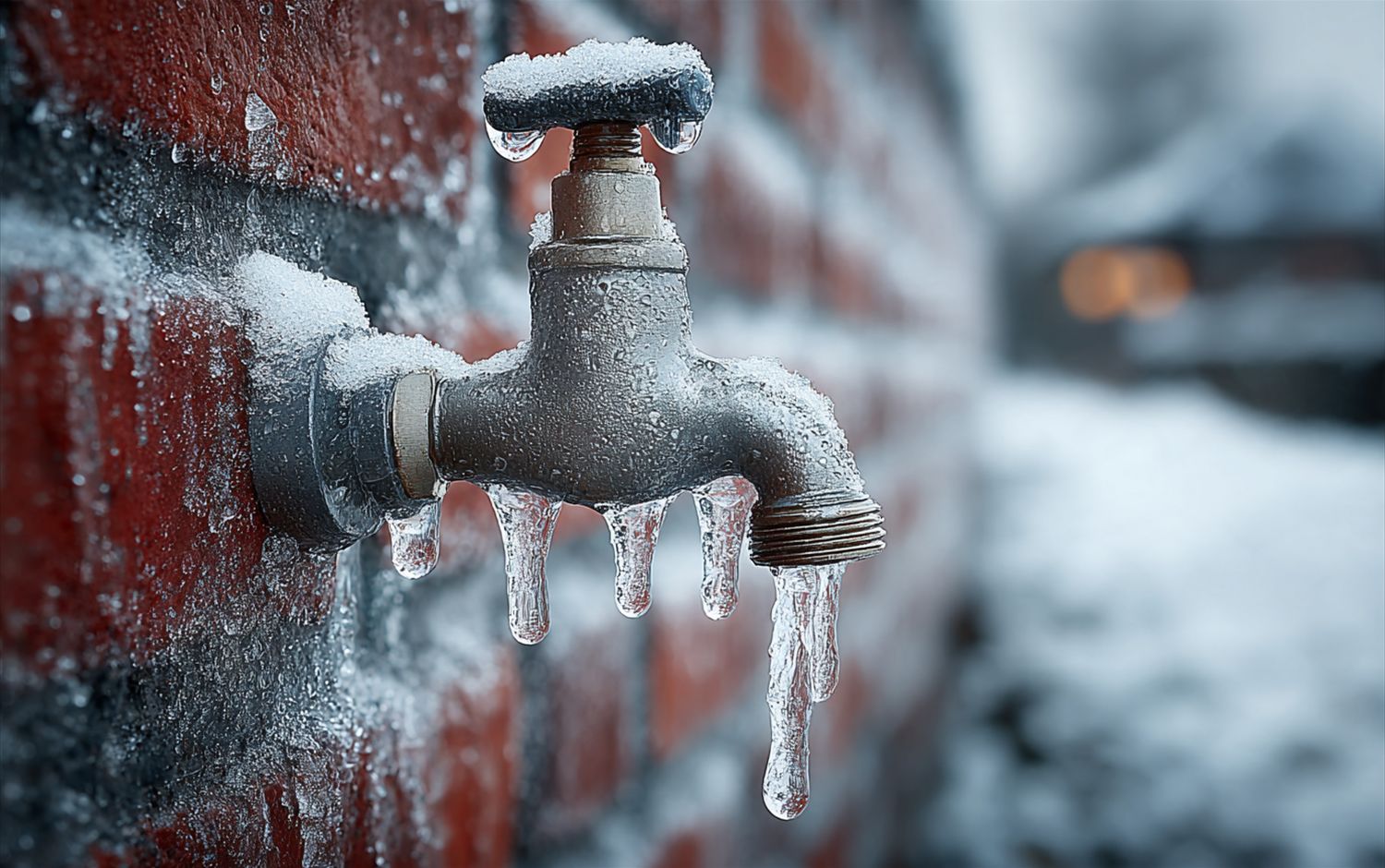
Burst and Frozen Pipes in West Jordan
A frozen pipe usually leaks when it thaws, not when it freezes: ice splits the pipe or a fitting, holds the water back while it's frozen, and lets it pour out once the temperature rises. That's why the damage often appears in the afternoon after a cold night, in a garage ceiling, an outside wall or a basement below. For burst pipe water damage in West Jordan, call (385) 318-3819 to reach an independent restoration company that works here.
Source: close the main as soon as you suspect a split line. In many West Jordan houses the main shutoff is in the basement near the water heater, with another valve at the meter near the street.
What Splits in a Wasatch Cold Snap
| Where | Why it freezes |
|---|---|
| Hose bibs, especially with a hose still attached | The hose traps water in the faucet body, which sits in the cold |
| Sprinkler backflow assemblies | Above ground, often on the side of the house, full of water if not drained |
| Sprinkler lines | Water left in the lines over winter freezes in shallow pipe |
| Pipes in garage walls and ceilings | Garages aren't heated, and laundry or bath lines often run through them |
| Supply lines on exterior walls | Thin insulation, cold air through outlets and gaps |
| Lines under kitchen and bath sinks on outside walls | Cabinet doors keep warm air out |
| Basement lines near window wells or an unheated crawl | Cold concrete and drafts |
Source: a hose bib or backflow that splits outside usually doesn't flood the house, unless it's on a wall above a window well, or the split is inside the wall where the faucet connects.
Sprinkler Pipes, Backflows and Hose Bibs
Most West Jordan yards have in-ground sprinklers, and most sprinkler damage comes from systems that weren't drained before the first hard freeze. Lines are typically blown out with compressed air each fall. The backflow assembly, the brass device with valves above ground near the house, is the piece most likely to crack. When it thaws, water sprays against the foundation or into a window well.
Frost-free hose bibs help, but only if the hose is disconnected; a hose left on keeps water in the valve and splits the pipe inside the wall. That kind of split shows up as water in the basement ceiling or wall below, sometimes weeks later when the sprinklers are turned back on.
More on the season: frozen pipes in a Wasatch cold snap.
The Thaw
What happens in the hours after a cold snap breaks:
- Low or no water at a tap during the cold is a common first sign that a line froze.
- The temperature rises, the ice melts, and the split starts leaking.
- Water collects where nobody looks: in a garage ceiling, behind a finished basement wall, inside a kitchen cabinet.
- It shows up later as a stain, a drip at a light fixture, or wet carpet along an outside wall.
If a line froze but hasn't leaked yet, close the main until it's checked. Don't use an open flame or high heat on pipes inside walls; it's a fire risk.
After a Pipe Splits
- Close the main and open a faucet on the lowest level to drain the pressure.
- Turn off the water heater if the main will be off for long; follow the instructions on the tank.
- Stay out from under wet ceilings, and away from water near light fixtures and outlets.
- Photograph the split if you can see it, and every wet room.
- Call. The restoration company handles the water and drying; the pipe itself is repaired by whoever you choose.
Source: in a cold snap, many homes across the valley split pipes the same night. Getting the water off and documenting it early puts you in the best position, even if drying starts a little later than you'd like.
Drying a Burst-Pipe Loss
Burst-pipe water starts clean, which is good news. The work is mostly finding everywhere it went:
- Wall cavities on outside walls, opened at the bottom or drilled so air can move
- Garage ceilings, often cut open to dry the joists and the floor above
- Basement ceilings below a main-floor split
- Insulation that soaked up water, which usually comes out
Winter drying happens in a closed, heated house. Expect readings each visit until the wet materials match dry ones. More: water mitigation and drying.
Insurance, in General Terms
Homeowner policies commonly cover sudden water from a burst pipe inside the house, and commonly exclude damage from freezing in a house that was left unheated or vacant without precautions. Policies differ. Read yours, keep your photos and receipts, and call your agent early.
Ready.gov winter storm preparation
Pipes in the Garage Ceiling
Some West Jordan floor plans put a bedroom or a bonus room above the garage, with the bathroom or laundry lines running through the garage ceiling to reach it. Those lines sit in the coldest part of the house. A split there sends water through the garage drywall and onto whatever is parked or stored below, and it can run along the joists into the room above or the wall shared with the house. Keeping the garage door closed during cold snaps and insulating any visible lines are common precautions.
What Stops Pipes From Freezing?
Keep the heat on, including when you're away, disconnect hoses before the first freeze, have the sprinkler system blown out each fall, and open cabinet doors under sinks on outside walls during a cold snap.
How Do I Know If a Pipe Froze?
Little or no water at a faucet during very cold weather is the usual sign. Close the main until someone checks it.
Burst Pipes Around West Jordan
In West Jordan
- City CenterIn West Jordan
- Jordan OaksIn West Jordan
- Shadow MountainIn West Jordan
- Oquirrh ShadowsIn West Jordan
- Jordan HillsIn West Jordan
- Cobble CreekIn West Jordan
- EdenbrookeIn West Jordan
- Copper HillsIn West Jordan
Next door, north: Taylorsville · West Valley City · Kearns · Murray · Midvale
Next door, south: South Jordan · Riverton · Herriman · Bluffdale · Sandy