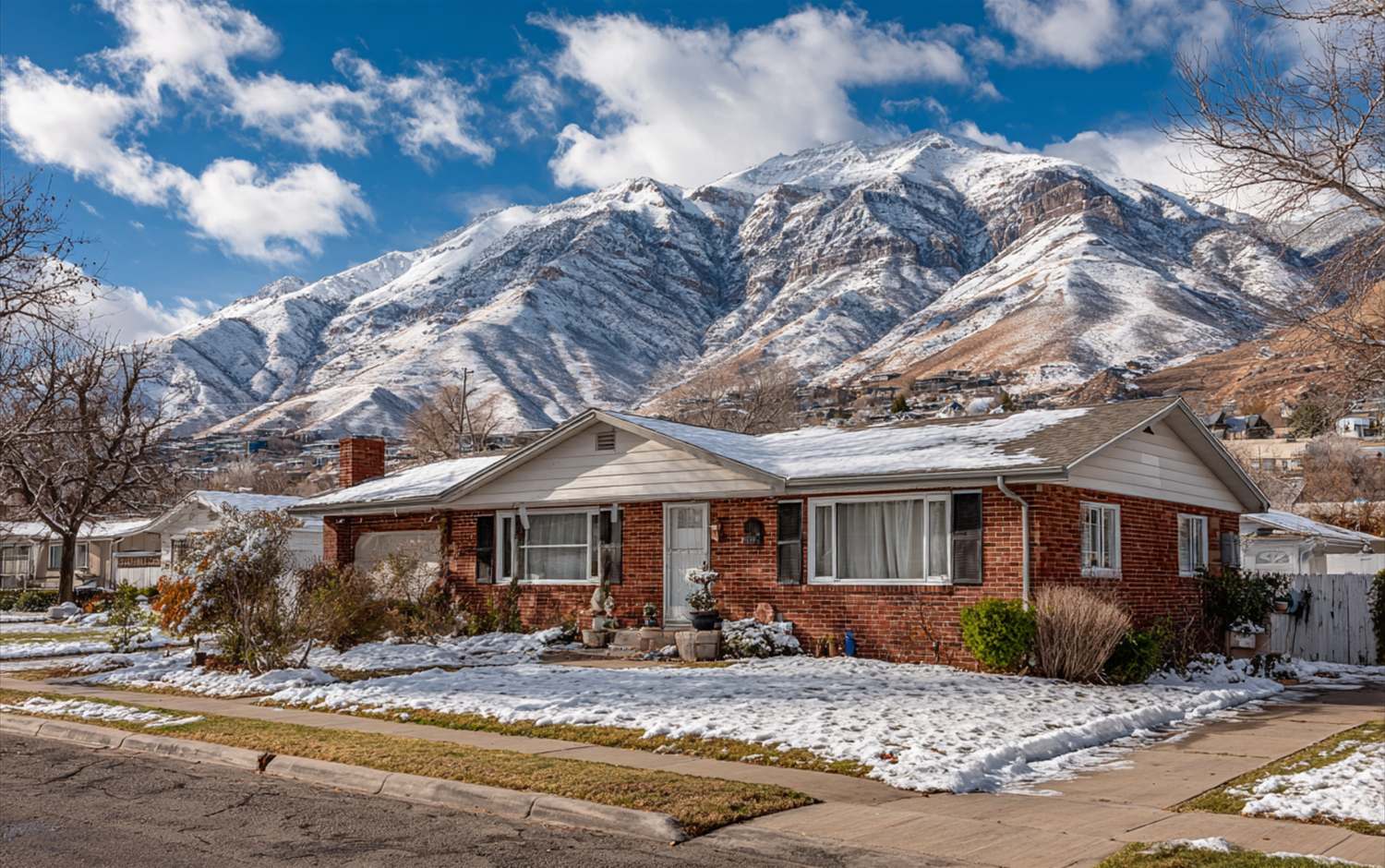
Source: the way older houses were built: a lower level only partly below grade, windows at ground height, block or poured walls finished decades later, and plumbing that has been added to over the years. Each design choice decides where water comes in and how it spreads.
Two Common Older House Types
Much of the Salt Lake Valley was built from the 1960s through the 1990s, and two house types dominate those blocks.
| Rambler | Split-entry | |
|---|---|---|
| Layout | One story above a full basement | Entry landing with half a flight up and half a flight down |
| How deep the basement sits | Mostly below grade, with small high windows | About half below grade, with larger windows near ground level |
| Typical basement use | Family room, bedrooms, laundry, storage | Bedrooms, family room, often a bath |
| Where outside water enters | Window wells and the wall-floor joint | Ground-level windows and the walls facing the yard |
Source: in a split-entry, the lower windows sit close to the ground. A flooded yard reaches them quickly, and water comes in at floor height.
What Older Basements Have in Common
- Finishes added in stages. A basement finished in the 1980s, updated in the 2000s and remodeled again may have three different wall and floor systems.
- Paneling or drywall over furring strips on concrete walls, with little or no insulation behind. Water hides well behind paneling.
- Original or partial plumbing. Galvanized or early copper lines, often joined to newer pipe; old shutoff valves that may not turn.
- Laundry in the basement, often beside the furnace room, with hoses that may be decades old.
Where Leaks Start
- Washer hoses and drains in a basement laundry
- The water heater and the joints near it
- Old valves under sinks and behind toilets
- The wall-floor joint and cracks in block walls after wet spells
- Window wells and ground-level windows in storms
Drying an Older Basement
Older finishes change how drying works. Paneling often has to come off the bottom of the wall to let the cavity behind it dry. Carpet laid directly on concrete with old pad is usually replaced. Block walls absorb water and release it slowly, so readings on the walls matter as much as the floor. Furring strips that have been wet for a long time may need replacing. The restoration company measures each material until it matches dry areas elsewhere. More: water mitigation and drying.
Upgrades While the Walls Are Open
When a basement wall is open after a leak, many owners take the chance to replace old supply lines and valves, add a drain pan under the washer, install a leak sensor by the water heater, or update to braided washer hoses. Those upgrades are usually separate from an insurance claim, so ask the company to list them separately.
Keeping Older Basements Dry
- Know the main shutoff and make sure it turns.
- Replace washer hoses every five years or so.
- Check the grading around ground-level windows.
- Look behind paneling occasionally at the bottom edge of outside walls.
Around West Jordan and Next Door
Late-1980s houses in Oquirrh Shadows are a good example of this generation. Split-entry homes fill much of Taylorsville and Kearns. In West Jordan, older blocks near City Center have both types, and newer areas like Cobble Creek show how basements have changed since.
EPA WaterSense: outdoor water use
Old Basements, Newer Neighbors
Older West Jordan and Taylorsville blocks often sit next to newer construction: an infill lot, a new subdivision across the street, or a neighbor's large addition. New construction can change how water moves. A new driveway, a regraded yard or a new retaining wall can send runoff toward an older house that never had a problem. If an older basement starts taking water after years of staying dry, it's worth asking what changed nearby. Note the date water first appeared, photograph the neighboring work, and mention it to the restoration company so it can record where water entered.
Buying an Older Basement
If you're buying an older West Jordan or Taylorsville home, ask the sellers about any water history and look closely at the basement. Stains on the bottom of paneling, new carpet in only one room, a fresh strip of drywall low on an outside wall, or efflorescence on a block wall can all point to past water. None of them rule a house out; they tell you which questions to ask and which walls to watch after you move in.
Questions
Is a split-entry more likely to flood than a rambler?
Not necessarily, but its lower windows sit closer to the ground, so yard water reaches them sooner.
Should old paneling be replaced after a leak?
Often the lower part is removed to dry the wall. Whether to replace it with paneling or drywall is your choice during the rebuild.
Why does my older basement smell damp after rain?
Block walls absorb moisture. If the smell comes with visible damp spots, have the walls and floor measured.
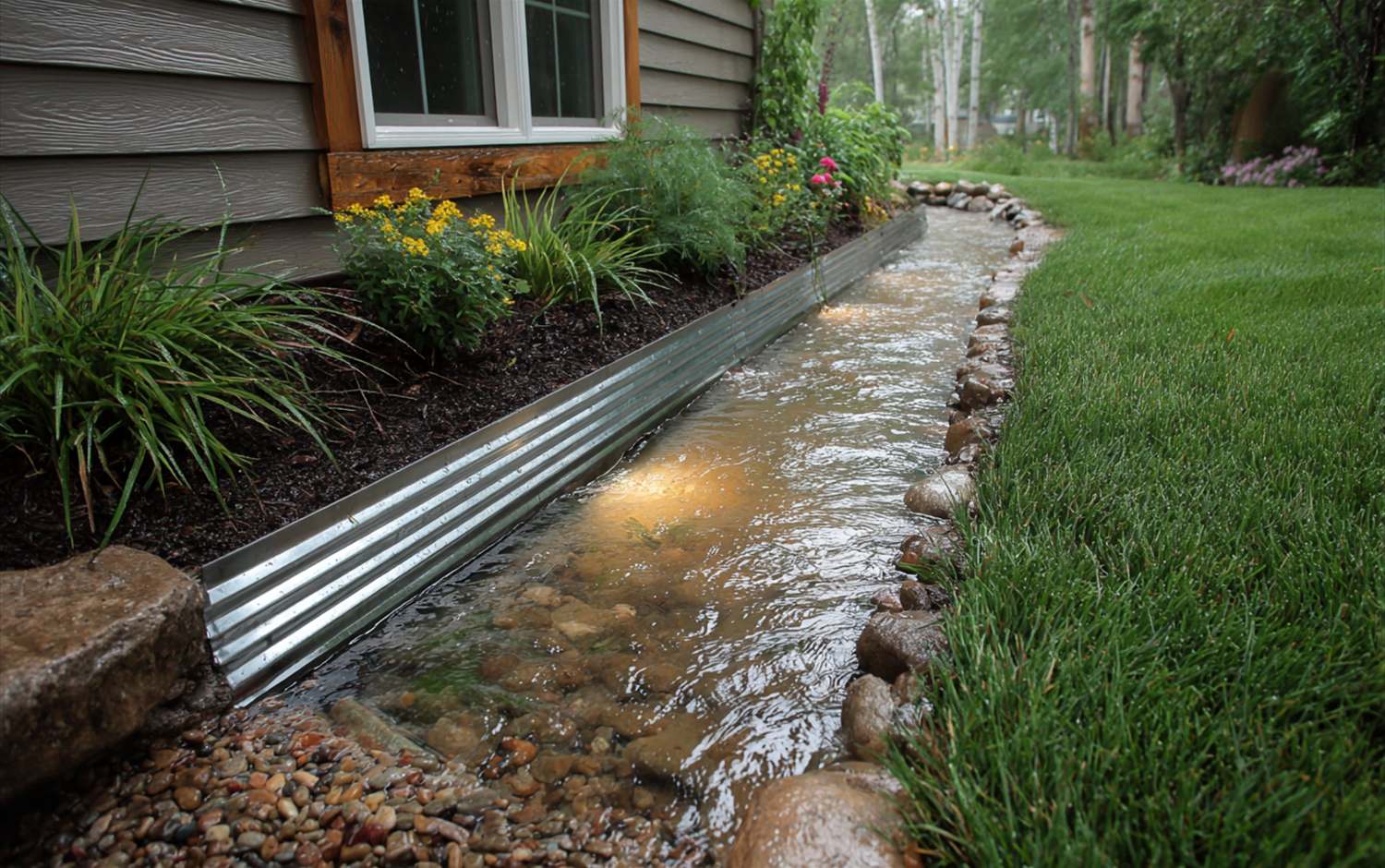
Window Wells and Egress Windows: Where Basement Water Gets In
The well, the drain at the bottom, and the window above it.
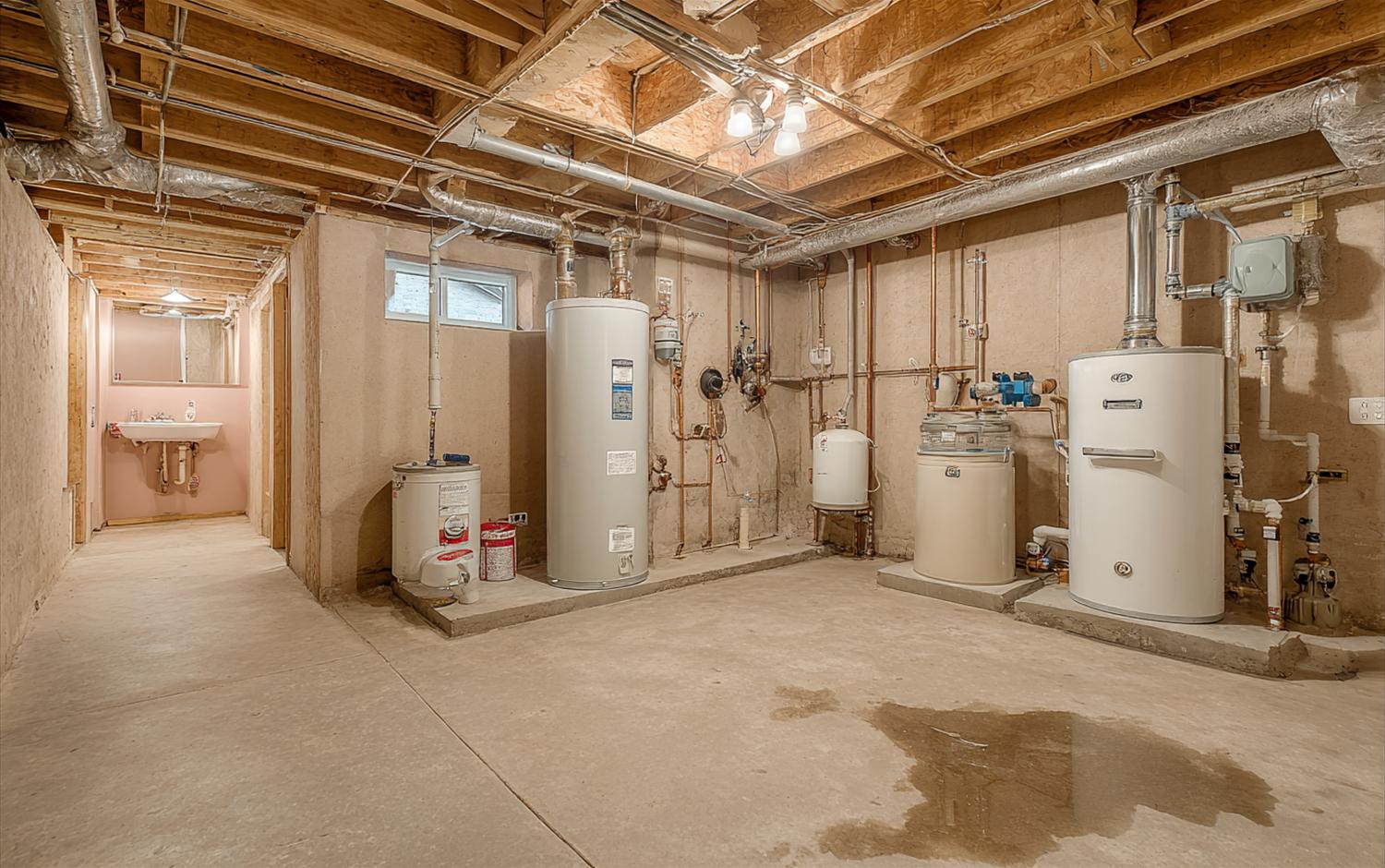
The Basement Furnace Room: Water Heaters, Softeners and Floor Drains
Three appliances and a drain in one small room.