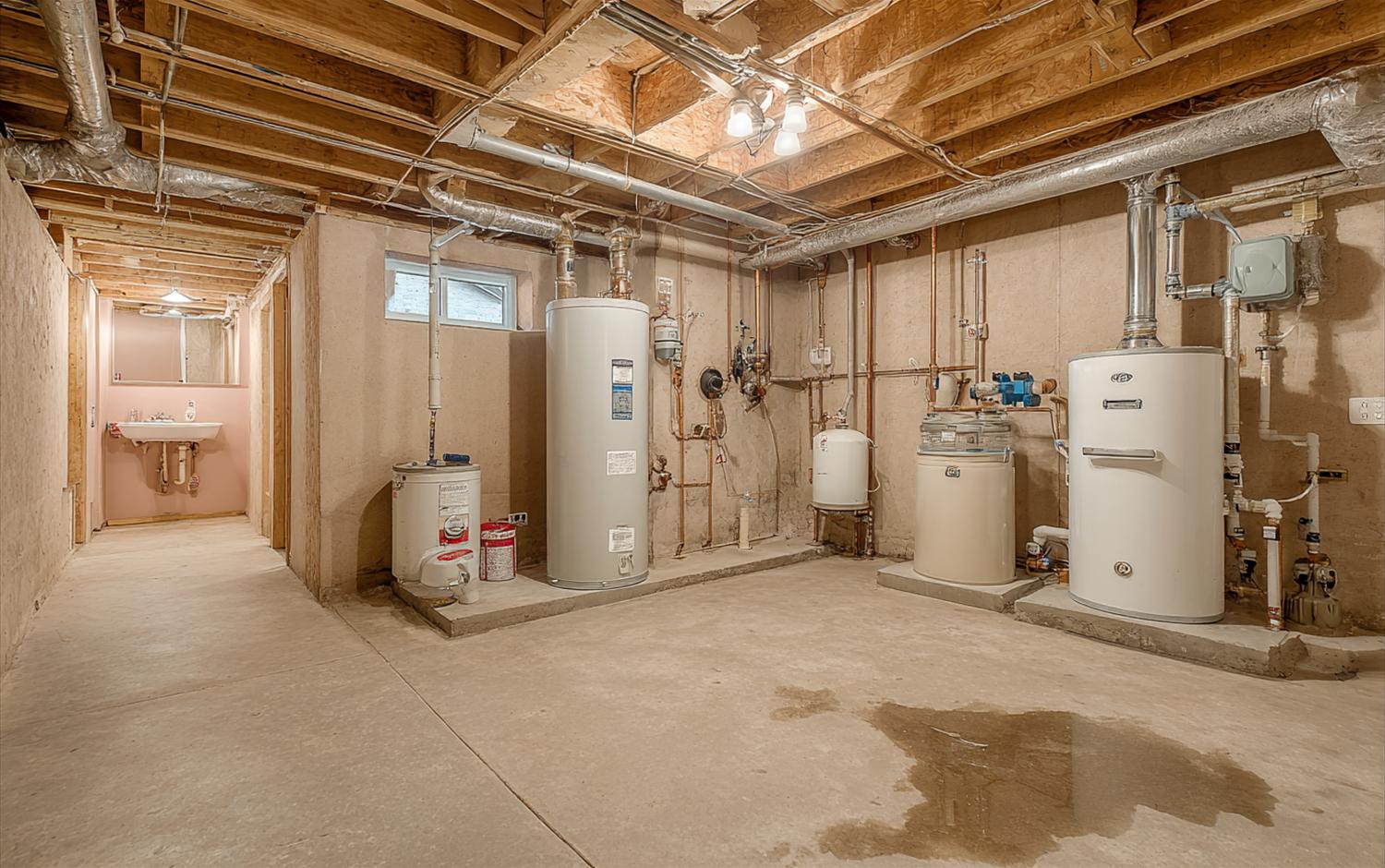
Source: the equipment that shares a small basement room in most West Jordan homes: a tank water heater, a water softener, the furnace and its condensate line, and a floor drain. Any of them can put water on the floor, and the floor is usually right next to finished rooms.
What's in the Room
In a typical West Jordan basement, one unfinished room holds the mechanical equipment. It's often near the bottom of the stairs, with a bedroom, family room or storage room on the other side of a thin wall.
| Equipment | What fails | How much water |
|---|---|---|
| Tank water heater | Rusted tank bottom, relief valve, supply connectors | Fifty gallons or more, and it keeps refilling until the cold supply is closed |
| Water softener | Fittings, the bypass valve, the brine tank, the drain line | A slow drip or a steady flow during regeneration |
| High-efficiency furnace | A blocked or disconnected condensate line | Small amounts, often for weeks |
| Floor drain | A clog or a backed-up line | Water coming up rather than going down |
| Humidifier on the furnace | A stuck valve or cracked line | A steady trickle |
Source: hard water is common in the Salt Lake Valley, which is why so many homes have softeners. Mineral buildup also shortens water heater life and crusts fittings.
How It Reaches the Finished Rooms
Furnace rooms usually have bare concrete floors and, ideally, a drain. But water doesn't always find the drain. It runs under the wall plates into the next room, soaks the carpet pad there, and wicks up the drywall. Often the first sign is a damp spot in a bedroom, not a puddle in the furnace room.
When the Water Heater Fails
- Close the cold-water supply valve on top of the tank.
- Turn off the power or gas following the tank's instructions.
- Keep away from the furnace and electrical connections if water is pooling around them.
- Photograph the tank, the label with its age, and the water's path.
- Call to get extraction started; the water heater itself is replaced by whoever you choose.
Tank water heaters often last somewhere around eight to twelve years; hard water can shorten that. The date is usually coded on the label. A tank past ten years, rusting at the base or dripping from the relief valve, is worth watching.
Drying the Room and the Rooms Next to It
The company extracts the water, checks the wall plates and carpet in adjoining rooms, cuts the bottom of wet drywall if water got into the walls, and dries the slab. Water heater water is clean, which helps. Anything that sat in water, especially the furnace, should be checked by a qualified technician before it runs again. More: flooded basement cleanup.
Keeping the Furnace Room Dry
- A drain pan under the water heater, plumbed to the floor drain
- A leak sensor on the floor beside the tank and the softener
- A clear path to the floor drain: no boxes stacked on it
- The softener's drain line secured so it can't pop out during regeneration
- The condensate line from a high-efficiency furnace checked for kinks and clogs each fall
Around West Jordan and Next Door
Late-1980s houses in Oquirrh Shadows are on their second or third water heater. Larger homes in Shadow Mountain may have two. Older basements in Kearns and Midvale often have equipment that has been replaced piece by piece.
DOE guide to residential water heaters
Tankless Heaters and Other Upgrades
Some West Jordan owners replace a failed tank with a tankless water heater mounted on the wall. Tankless units don't hold fifty gallons, so a failure doesn't empty a tank onto the floor, but their water connections, pressure relief valve and condensate line on high-efficiency models can still leak. Softeners have changed too: newer units use less water and salt but still have a drain line that discharges during regeneration. Whatever the equipment, the same rule holds: water has to have a clear path to the floor drain, and the room shouldn't be the place where a leak sits unnoticed beside finished living space.
Reading a Water Heater Label
The label on the side of a tank lists its capacity, its fuel and a serial number. Many manufacturers code the month and year of manufacture into that serial number, often in the first few characters. If you can't decode it, a photo of the label is enough for an installer or the manufacturer to tell you. Knowing the age turns a guess into a plan, and a plan is cheaper than a flooded furnace room.
Questions
Why is there water around my furnace in winter?
A high-efficiency furnace produces condensate. If its line is blocked or disconnected, the water collects on the floor.
Can a softener cause a basement flood?
Yes. A failed fitting or a loose drain line during a regeneration cycle can put a lot of water on the floor.
Should I replace my water heater before it fails?
Many owners replace older tanks on a schedule rather than waiting. The manufacturer's guidance and the tank's age label help decide.
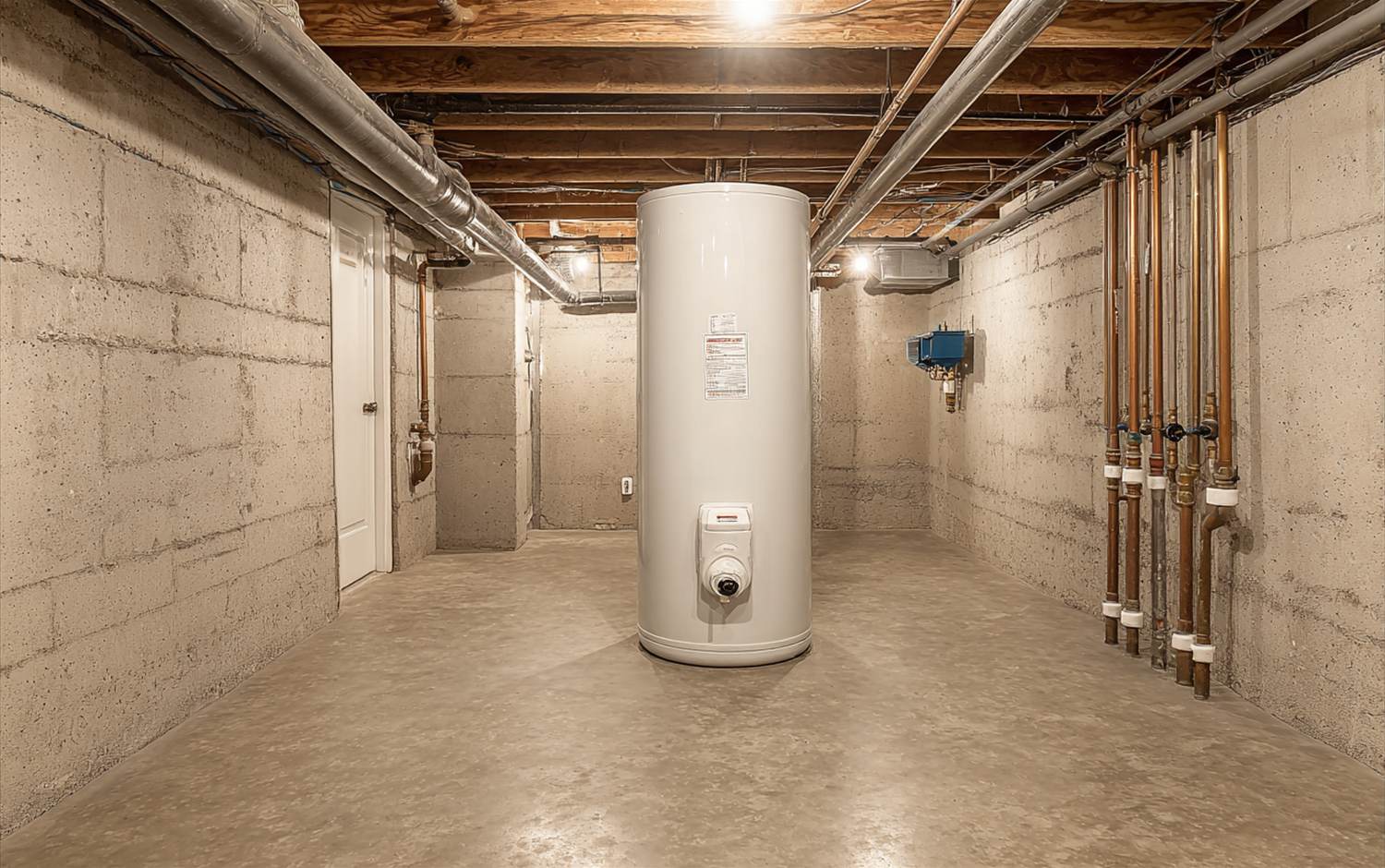
Earthquake Strapping: Water Heaters and Water Pipes on the Wasatch Fault
Keeping the tank upright when the ground moves.
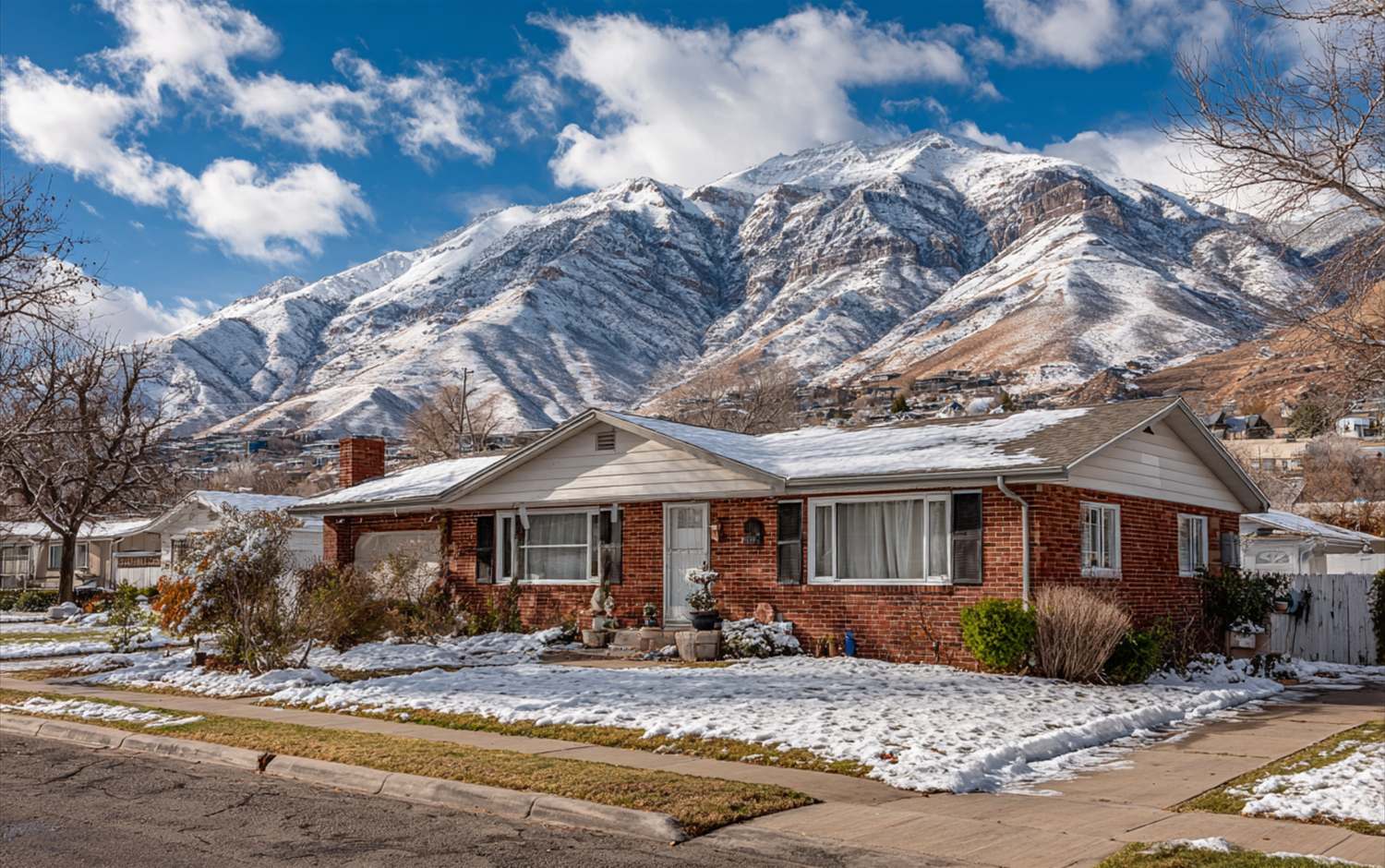
Split-Entry and Rambler Basements: How 1970s–90s Houses Handle Water
Half-buried windows, block walls and older plumbing.