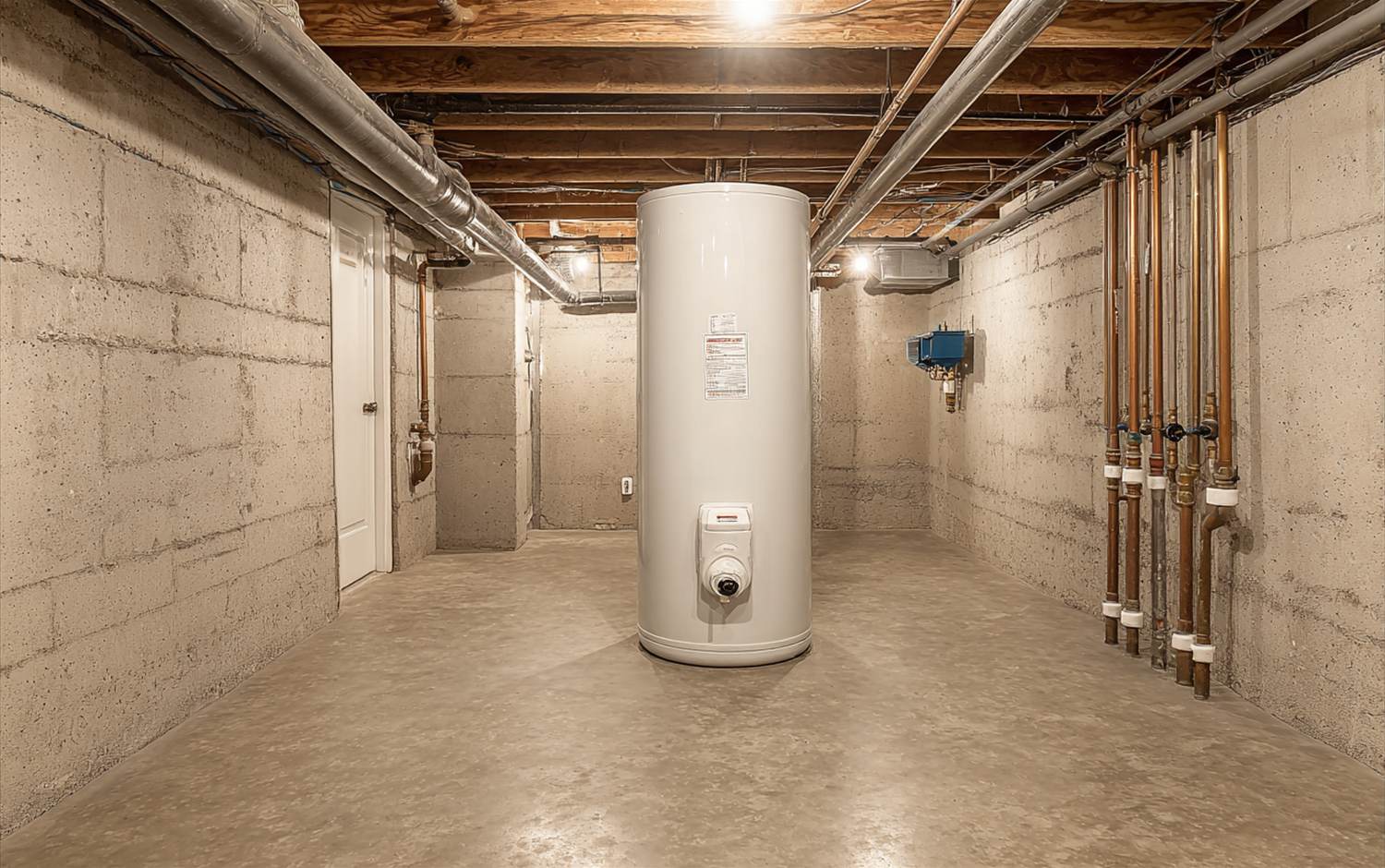
Source: an earthquake that shakes an unsecured water heater off its base or snaps rigid water lines. A full tank holds fifty gallons or more, and a broken line keeps flowing until someone closes the main.
Living on the Wasatch Fault
The Salt Lake Valley sits along the Wasatch Fault, one of the most studied fault zones in the West. The Utah Geological Survey has mapped it in detail and considers a large earthquake on the Salt Lake City segment a real long-term risk. In March 2020, a magnitude 5.7 earthquake centered near Magna shook the valley, a reminder that the ground here moves.
Most earthquake damage people imagine is structural. Inside a basement, though, some of the most common damage is water: a water heater that tips or shifts, and the pipes connected to it.
Why Water Heaters Move
| Weak point | What happens in shaking |
|---|---|
| An unstrapped tank | It walks, rocks or falls, tearing its water and gas connections |
| Rigid copper connectors | They don't flex, so they crack at the joints |
| A tank on a platform | It can slide off the edge |
| Loose shelving nearby | It falls against the tank or lines |
Source: a tank that moves even a few inches can break its connections. The water leak starts immediately, often while everyone is still dealing with the earthquake itself.
Straps and Flexible Supply Hoses
The usual protection is simple: two metal straps around the tank, one in the upper third and one in the lower third, anchored into the wall framing or masonry, and flexible connectors on the water lines so they bend instead of breaking. Strapping kits are sold at hardware stores, and many owners hire the installation out. The manufacturer's instructions and local requirements apply.
After Shaking
- Check for gas. If you smell gas, leave the house and call the gas company or 911 from outside. Don't flip switches.
- Close the main water shutoff if you see water or hear it running.
- Turn off power to the water heater if water is pooling around it.
- Photograph the tank, the connections and the water's path.
- Call to get the water out once it's safe to be in the house.
Earthquake insurance is usually a separate policy. Water damage caused by an earthquake may be treated differently from an ordinary leak, so read your policy and ask your agent.
Drying After an Earthquake Leak
Water from a broken tank or supply line is clean, and it's usually fast and heavy. Extraction starts in the furnace room and works outward into the finished rooms next to it. The company checks wall plates, carpet and drywall in adjoining rooms and dries the slab. More: the basement furnace room.
Other Things to Secure
- The water softener and its brine tank, if they sit next to the heater
- Shelving in the furnace room, anchored to the wall
- Washers and dryers on upper floors, which can walk and pull hoses loose
- Knowing where the main shutoff is, and keeping a wrench nearby if it needs one
Around West Jordan and Next Door
Older basements in Kearns and West Valley City often have water heaters installed before strapping was standard. In West Jordan, check tanks in older homes near City Center and in Oquirrh Shadows.
Utah Geological Survey: earthquakes Be Ready Utah
The Rest of the Water System
The water heater gets the attention, but other parts of a basement plumbing system can fail in shaking too. Rigid lines running between floors can crack where they pass through framing. The connection at the water meter can break if the ground shifts. Washer supply hoses on an upper floor can pull loose if the machine walks. Knowing how to shut off water to the whole house quickly matters more after an earthquake than at almost any other time, because several small leaks can start at once. Some owners keep a shutoff tool hanging next to the main valve so it's there when it's needed.
A Five-Minute Basement Check
Once a year, walk the furnace room with a flashlight. Are the straps tight and anchored into framing, not just drywall? Are the water connectors flexible? Is the gas line, if any, a flexible connector too? Is anything heavy stored on shelves above the tank? Can you reach the main water valve without moving boxes? Five minutes covers it, and it's the kind of check that pays off on the one day it matters.
Questions
Is my water heater already strapped?
Look for metal straps around the tank anchored to the wall. Many newer installs have them; older ones may not.
Do flexible supply hoses matter if the tank is strapped?
Yes. Straps keep the tank from falling; flexible connectors let the lines move without breaking.
Will a small earthquake damage my water heater?
Usually not, but even moderate shaking can loosen connections. Check for leaks after any noticeable quake.
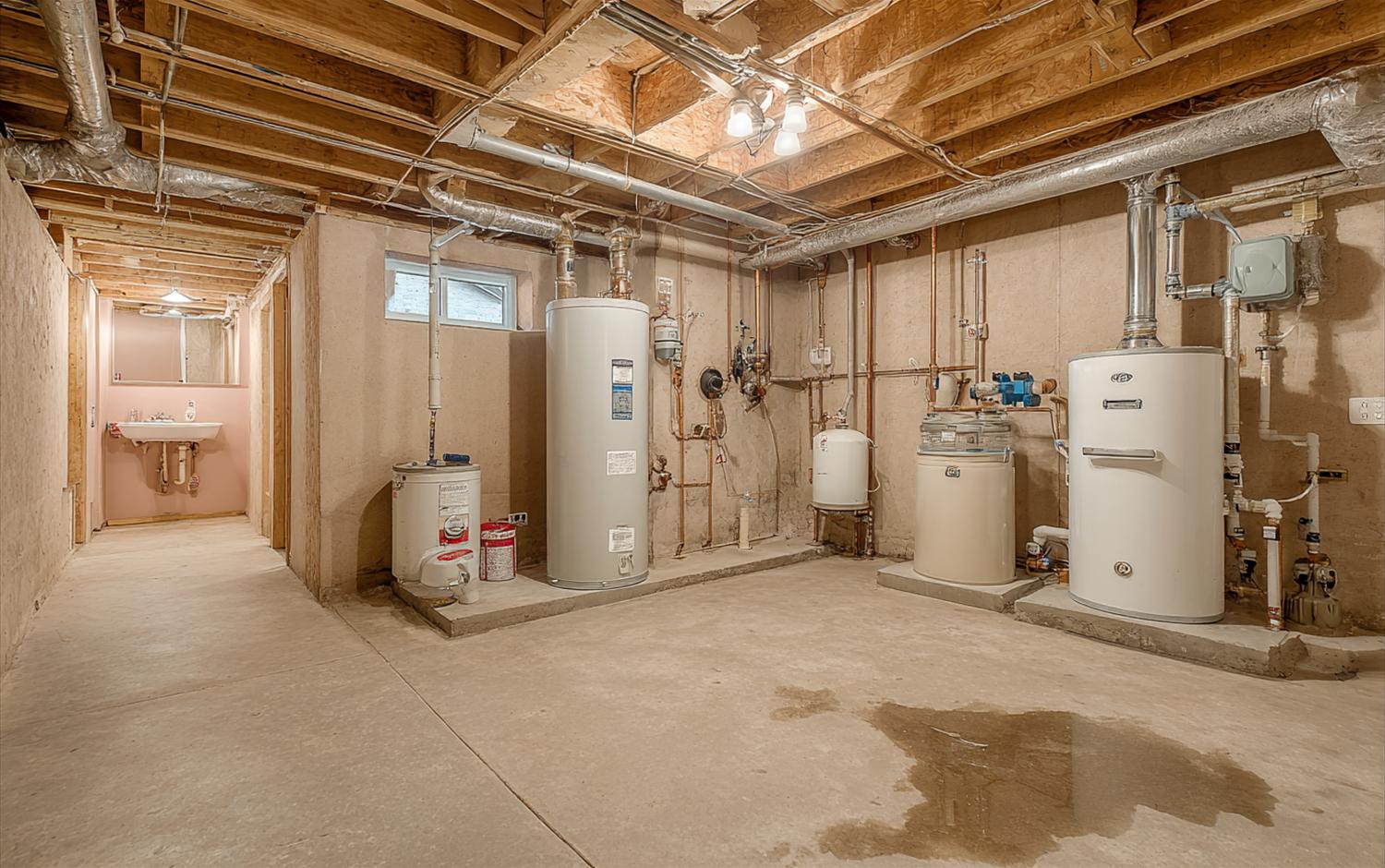
The Basement Furnace Room: Water Heaters, Softeners and Floor Drains
Three appliances and a drain in one small room.
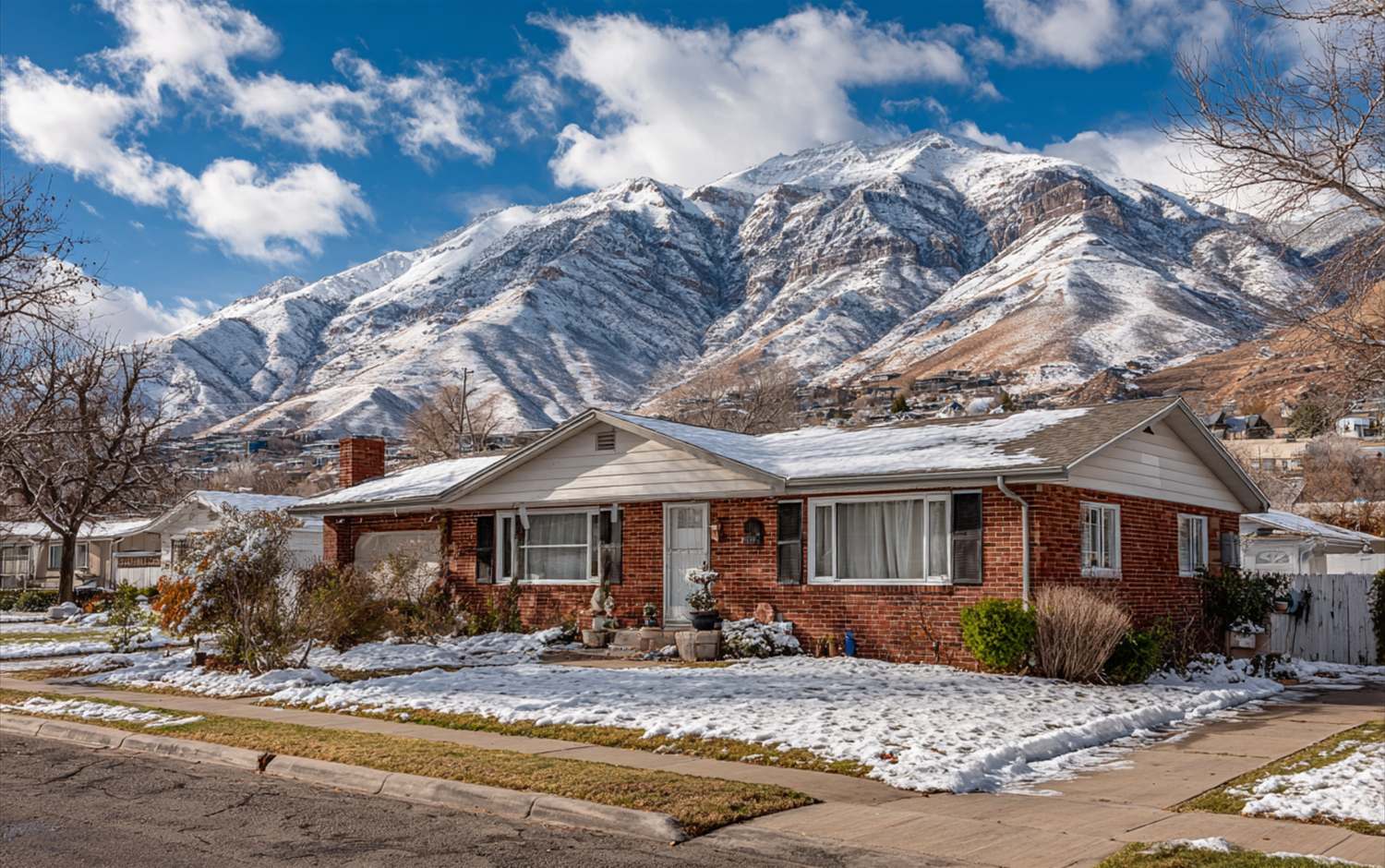
Split-Entry and Rambler Basements: How 1970s–90s Houses Handle Water
Half-buried windows, block walls and older plumbing.